Active Release and Passive Release Treatment in Palm Desert & Rancho Cucamonga
Soft tissue dysfunction — including scar tissue buildup, adhesions, and chronic muscle tension — is one of the most common yet undertreated contributors to pain and restricted movement. At Avalon Chiropractic Healing Center, our doctors use both active and passive release techniques to target these issues directly, restoring normal tissue function and mobility with precision hands-on care. If tight muscles, overuse injuries, or post-injury scar tissue are holding you back, call us at (760) 340-1264 - Palm Desert Office or (909) 921-8415 - Rancho Cucamonga Office to schedule an evaluation.
What Is Active Release Treatment?
Active Release Treatment (ART) is a movement-based, hands-on soft tissue therapy in which the clinician applies precise manual tension to a targeted muscle, tendon, ligament, fascia, or nerve while guiding the patient through a specific movement of the affected body part. This simultaneous application of pressure and movement is what distinguishes ART from other manual therapies — it actively engages the tissue through its full range of motion while the adhesion or restriction is being addressed.
When muscles and connective tissues are overused, injured, or subjected to repetitive strain, the body produces dense scar tissue as part of the healing process. Over time, this scar tissue can bind structures together, reducing flexibility, causing pain, trapping nerves, and creating the cycle of chronic tightness that many patients experience. Active release treatment breaks up these adhesions mechanically, restoring the natural glide and movement between tissue layers. Patients typically notice reduced stiffness, improved range of motion, and decreased pain — often within just a few sessions.
What Is Passive Release Treatment?
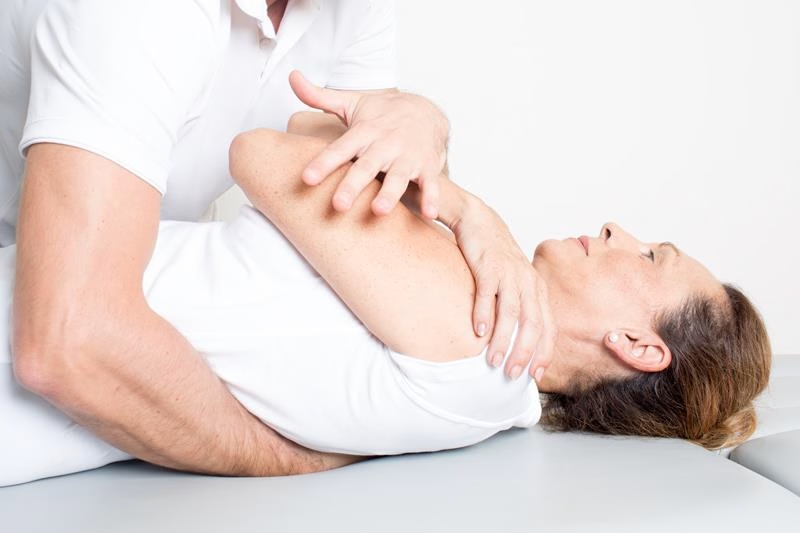
Passive release techniques involve the clinician gently mobilizing, stretching, or manipulating the affected tissues while the patient remains fully relaxed. Rather than requiring the patient to actively move, passive release allows the clinician to control the direction, speed, and depth of pressure applied to release tight or restricted areas. This approach is especially well-suited for patients who are in acute pain, have limited strength or mobility, or who need a gentler introduction to soft tissue therapy before progressing to more active techniques.
Passive release methods at Avalon Chiropractic Healing Center may include myofascial release, pin-and-stretch techniques, contract-relax stretching, and slow sustained tissue mobilizations. These methods are generally comfortable and often produce a pleasant sense of release and relaxation in the treated tissues. They are also highly effective for addressing chronic muscle guarding patterns that develop in response to pain and injury.
Combining Active and Passive Release for Best Results
In practice, our doctors at Avalon Chiropractic Healing Center often combine both active and passive release approaches within a single treatment session, tailoring the ratio of each technique to the patient’s specific condition, pain level, and functional goals. Active work rebuilds proper movement patterns and restores neuromuscular coordination, while passive work prepares and relaxes the tissue so that active techniques can be applied more effectively and with less discomfort.
Release therapy pairs exceptionally well with spinal manipulation and adjustment, kinesio taping, therapeutic ultrasound, and electrical muscle stimulation to create a comprehensive soft tissue and spinal care plan. It is commonly used to treat sports injuries, repetitive strain injuries, carpal tunnel syndrome, frozen shoulder, tennis elbow, golfer’s elbow, and post-injury rehabilitation. Contact Avalon Chiropractic Healing Center in Palm Desert & Rancho Cucamonga at (760) 340-1264 - Palm Desert Office or (909) 921-8415 - Rancho Cucamonga Office to learn whether release therapy is right for your condition.
Active Release & Passive Release Treatment FAQs
What conditions does active release treatment help with?
Active release treatment is effective for a wide range of soft tissue conditions including chronic neck and back pain, rotator cuff injuries, frozen shoulder, tennis elbow, golfer’s elbow, carpal tunnel syndrome, plantar fasciitis, IT band syndrome, hamstring strains, and post-surgical adhesions. It is particularly effective for overuse and repetitive strain injuries that have not responded to rest or other conservative care.
Is active release treatment painful?
Active release treatment can produce a sensation that patients often describe as a “good hurt” — there may be brief discomfort as adhesions are being worked through, but it should never be acutely painful. Our doctors at Avalon Chiropractic Healing Center communicate closely with patients throughout the session and always adjust pressure and technique based on your comfort and feedback. Mild soreness for one to two days following treatment is normal and generally subsides quickly.
How many sessions of release therapy will I need?
The number of sessions depends on the nature and duration of your condition. Many patients experience significant improvement within four to six sessions, though long-standing or complex soft tissue conditions may require more. Your doctor at Avalon Chiropractic Healing Center will assess your progress regularly and adjust the treatment plan as needed. Release therapy is often most effective when combined with other modalities such as chiropractic adjustments and rehabilitative exercises.
Who is passive release treatment best suited for?
Passive release is ideal for patients who are in acute pain, have significant limitations in strength or mobility, are recovering from surgery, or who are new to manual soft tissue therapy and need a gentler starting point. It is also beneficial for patients with chronic muscle guarding or high levels of tissue sensitivity. Our doctors will determine the most appropriate approach during your initial evaluation at Avalon Chiropractic Healing Center.
Can release therapy help after an auto accident or work injury?
Yes. Release therapy is an excellent complement to auto accident injury and work injury rehabilitation. Trauma from accidents and repetitive workplace strain commonly results in soft tissue damage, scar tissue formation, and adhesions that can cause long-term pain and dysfunction if not properly treated. Our doctors incorporate release techniques into comprehensive injury recovery programs.
Does insurance cover active and passive release treatment?
Coverage varies by insurance plan. Active and passive release techniques are often included as part of a broader chiropractic or physical rehabilitation claim. We encourage you to visit our payment options page or call us at (760) 340-1264 - Palm Desert Office or (909) 921-8415 - Rancho Cucamonga Office so our team can verify your benefits and explain what is covered under your plan.
How does release therapy differ from massage therapy?
While both release therapy and massage work with soft tissues, they differ significantly in approach and intent. Massage therapy primarily focuses on relaxation and general circulation improvement. Active and passive release techniques used at Avalon Chiropractic Healing Center are clinically precise — targeting specific adhesions, scar tissue patterns, and restricted tissue planes to restore normal biomechanical function. The active component (where the patient moves while pressure is applied) has no equivalent in traditional massage.